
Did you know that 80% of your revenue comes from just 20% of your customers? Imagine you could determine exactly who they are. And what's more – that you knew which customers only need a gentle nudge to join those elite 20% as well. This isn't science fiction – this is the reality that proper customer segmentation can offer you.
But how do you do customer segmentation properly? And how does it differ from market segmentation? Let's take a detailed look.
Summary for Those Who Don't Have Time to Read the Whole Article
- RFM analysis is a simple but powerful customer segmentation tool based on three key metrics: when customers last bought (Recency), how often they buy (Frequency) and how much they spend (Monetary).
- Customer segmentation using RFM analysis helps you identify your most valuable customers, those with growth potential and those you should quickly reactivate.
- To create an RFM segmentation you need only minimal data – customer ID, transaction ID, purchase date and its value – which makes it accessible even to smaller companies.
- Properly applied market segmentation increases the conversion rate, lowers acquisition costs and dramatically improves the return on marketing investment.
- The Pareto 80/20 rule applies to customer segmentation too – 20% of your customers generate 80% of revenue; thanks to RFM analysis you know exactly who they are.
Explaining the Basic Terms
Before we dive into the depths of customer analysis, let's explain a few terms that will come in handy not only in this article, but also in discussions with marketing specialists.
Market Segmentation vs. Customer Segmentation
Imagine you're invited to a monstrous family celebration. Around the table sit your grandmother who loves old Czech films, a cousin obsessed with cryptocurrencies, a vegan aunt and an uncle who doesn't consider a meal without meat to be a meal. Can you imagine bringing the same gift for all of them? Hardly.
Market segmentation is essentially the same thing – it's the art of dividing a large, heterogeneous group of potential customers into smaller, more logical units that you can work with more effectively. You can then target each of them with a different ad and lower not only the cost per click, but above all the cost per conversion.
And how does customer segmentation differ from market segmentation? It's like the difference between the "guest list" and the "list of those who actually came." Market segmentation works with the whole available market – with all potential customers – while customer segmentation focuses only on those who have already bought from you at some point.
When you segment the market, you may find that your ideal target audience is young families with children under 5, sporty thirty-somethings and healthy pensioners.
But when you look at the segmentation of your actual customers, you may find that 80% of your revenue is generated only by sporty thirty-somethings.

Homogeneous vs. Heterogeneous Segmentation
This distinction is simpler than it may sound:
Homogeneous segmentation creates groups that are as similar as possible internally – like sorting socks by colour. All the black ones together, all the white ones together. You try to make the members of each group like twins.
Heterogeneous segmentation, on the other hand, creates groups that differ from each other as much as possible – like seating people at a party so that every table has a mix of different personalities. The goal is to have segments that are in maximum contrast to one another.
RFM Analysis
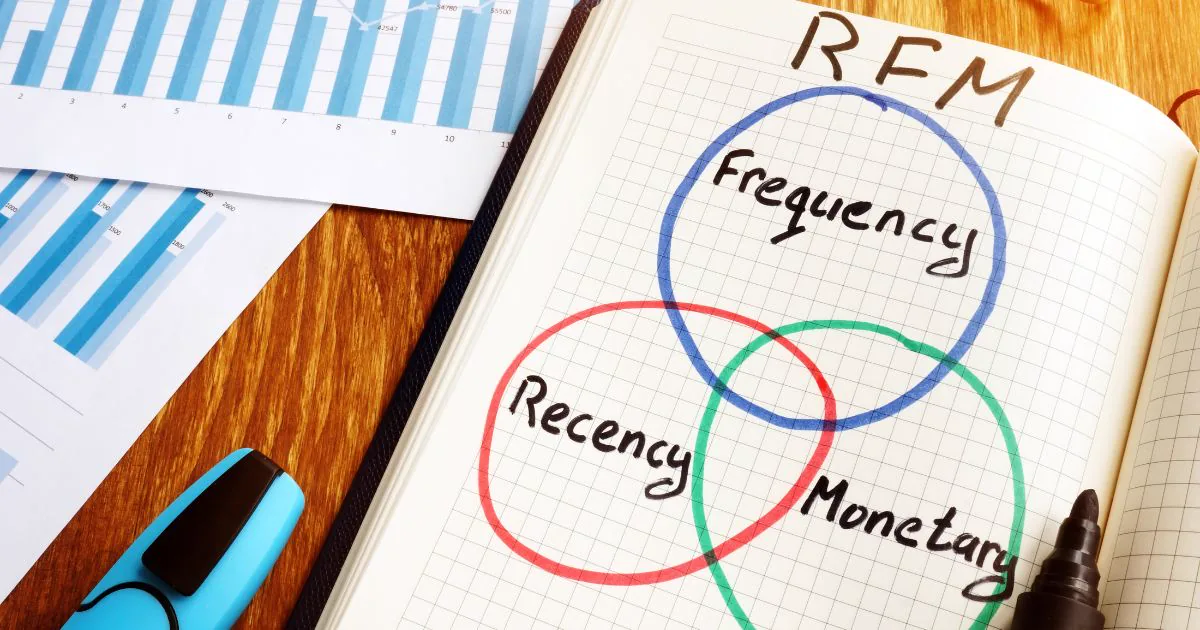
RFM analysis is basically a simple marketing tool that evaluates customers by three main measures – when they last bought (Recency), how often they buy (Frequency) and how much they have spent in total (Monetary). Thanks to this you can effectively tell your most loyal customers from those who have probably gone over to the competition, all without complex technology – basic data and a spreadsheet are enough.
Segmentation, Targeting, Positioning (STP)
It may sound a bit complicated, but it is in fact a basic three-step process that helps companies find their place in the market:
- Segmentation – Dividing the market into meaningful groups (we already know this one).
- Targeting – Choosing the segments we will serve. It's like choosing friends to help you move house – some segments make more sense for you than others.
- Positioning – Creating a clear position in customers' minds. Are you the luxury venue where people go for meetings with millionaires, or rather a cosy second-hand shop where you can find treasures for next to nothing?
Behavioural Segmentation
While demographic segmentation divides you by WHO you are (age, gender, income), behavioural segmentation is interested in WHAT you do. It's like the difference between "I'm 35 and I live in Prague" and "I only shop at night and I always order cashews in caramel with it."

Psychographic Segmentation
Here we get into territory that Sigmund Freud would have loved. Psychographic segmentation focuses on your values, attitudes, interests and lifestyle. It doesn't care that you're a thirty-year-old woman from Pilsen, but that you're a vegan who loves yoga, travel and fights for animal rights.
Now that we have the basic terms behind us, let's look at what really interests you – how to use these things to make more money and stop wasting time on customers who will never pay it back.
RFM Analysis: A Simple Tool with Powerful Results
As we have already said, RFM analysis is a methodology for segmenting customers by three key metrics:
- R (Recency): When did the customer last buy?
- F (Frequency): How often the customer has bought (number of purchases divided by the time between the first purchase and the time of calculation)
- M (Monetary): How much money has the customer spent in total?
This concept was introduced in 1995 by Jan Roelf Bult and Tom Wansbeek in an article focused on direct mail marketing, and since then it has become the gold standard in customer analytics. Why? Because it works in practically every industry – from e-shops through services to the B2B sector.
Why Is RFM Analysis So Effective?
RFM analysis is based on several proven psychological principles of consumer behaviour:
- Customers who have bought recently are more likely to buy again (the Recency principle)
- Customers who buy often will probably keep buying often (the Frequency principle)
- Customers who spend a lot tend to spend a lot in the future too (the Monetary principle)
The beauty of RFM analysis is that you don't need complex data or advanced analytical tools. You only need basic information that you probably already have:
- Customer identifier
- Transaction identifier
- Date of each purchase
- Value of each purchase
If you run an e-shop or have a loyalty programme, you already have this data. And if not, it's time to start collecting it – an investment in a basic data infrastructure will pay you back many times over.
How to Create an RFM Segmentation Step by Step
Let's go through how to create an RFM analysis in practice (if it seems complicated to you, don't hesitate to contact us, we'll help you with it):
1. Data Preparation
First we need to gather the basic data:
- Customer ID (or email, phone number – anything that uniquely identifies the customer)
- Transaction identifier
- Date of each transaction
- Value of each transaction
To calculate the RFM score you usually need data for a certain period – typically 1–2 years, but it depends on your industry. For an e-shop with fast-moving goods a few months may be enough, for a car dealer you will need data for several years.
2. Calculating RFM Values for Each Customer
For each customer we calculate:
- Recency: Number of days since the last transaction
- Frequency: Total number of transactions in the monitored period
- Monetary: Total value of all transactions (or possibly the average order value)
Before we get to work with the data, we need to think about:
- what we actually want from the individual customer groups,
- how we plan to work with them in the future and whether we are even capable of it,
- how often the analysis will be run.
Since our customers keep buying, the input data is constantly changing. If we use the RFM analysis data only for email marketing sent once a month, it will most likely be enough to update the analysis just before sending. If we run the analysis for several channels running almost continuously, a month-old analysis can completely spoil the targeting.
It is clear that 10-year-old input data will not serve the same purpose as recent data. We should therefore process older data with a different weight than current information (you can read more in the Modifiers section).
Possible Modifiers
We can use RFM analysis as inspiration and calculate it from other variables, for example using gross profit instead of the purchase price.
We can also calculate RFM analysis only from a certain segment, whether of customers or of the products sold.
If we modify any standard analysis, we must first get to know the company's business, its maturity, and understand why and how we are modifying the given analysis.
3. Dividing Customers into Segments
Now we divide the customers by each metric into several levels (most often 3–5). We can use percentiles (e.g. the best 20% of customers get a score of 5, the next 20% a score of 4, and so on) or define specific thresholds based on our experience with the given market.
For example, for a clothing e-shop the division could look like this:
Recency (time since the last purchase):
- Level 5: 0–30 days
- Level 4: 31–60 days
- Level 3: 61–120 days
- Level 2: 121–180 days
- Level 1: more than 180 days
Frequency (number of purchases):
- Level 5: 10+ purchases
- Level 4: 5–9 purchases
- Level 3: 3–4 purchases
- Level 2: 2 purchases
- Level 1: 1 purchase
Monetary (total value of purchases):
- Level 5: over CZK 20,000
- Level 4: CZK 10,000–19,999
- Level 3: CZK 5,000–9,999
- Level 2: CZK 1,000–4,999
- Level 1: less than CZK 1,000

4. Combining Values into an RFM Score
Now we can assign each customer a three-digit RFM code. For example, a customer with code 543 is one who bought recently (R=5), buys relatively often (F=4), but doesn't spend that much (M=3).
When interpreting the RFM score it is important to realise that each component has a different weight. Usually Recency has the greatest influence on the probability of a future purchase, followed by Frequency and finally Monetary.
For simplification we sometimes use a summary RFM score that takes these weights into account:
RFM score = (R * weight R) + (F * weight F) + (M * weight M)
The weights can be, for example: weight R = 3, weight F = 2, weight M = 1.
5. Extreme Values in RFM Analysis
RFM segmentation also deals with customers at extreme values. After the initial segmentation these customers can be excluded from the analysis and handled individually. Typically this could be an e-shop with thousands of ordinary customers and one wholesale buyer with different purchasing terms. This wholesale buyer would normally be excluded from the analysis and handled individually.
6. Defining Customer Segments
Based on the RFM score we can define customer segments. To show you in a practical example, we'll present real segment names together with their RFM codes. But beware, this is not transferable to another company, because every company has a different average order value and a different purchase cycle (you don't buy a car as often as groceries):
1. Champion (125, 124, 225, 155, 145) Customers who come back regularly (have bought more than 9 times), buy regularly (more often than once every 60 days) and the value of all their orders is higher than the average total value of all orders of all customers (CZK 3,500).
2. Potentially loyal customers (214, 213, 224, 235, 135, 123, 223) Customers who bought less than 120 days ago repeatedly (more than 2 times) and at the same time bought for a higher average amount than usual (CZK 2,500–3,500).
3. Needs attention (314, 313, 312, 315, 324, 325) Customers who bought 120 days ago, but at the same time bought several times and for an amount of CZK 1,500–2,500.
4. Promising new customer (215, 114, 113, 115) Customers who bought less than 60 days ago once or twice and at the same time bought for a slightly above-average amount of CZK 1,500–2,500. It need not be the first purchase, but also a repeat (reactivated) one.
5. New customer (211, 111, 112) Customers who bought for the first time in the last 60 days for the usual amount of up to CZK 1,500.
6. Hibernating good customer (414, 415) Customers who bought 180–240 days ago and at the same time bought for an amount in the range of CZK 1,500–2,500. Some of these customers may have bought more than once.
7. Hibernating regular customer (413, 311, 411, 412, 312) Customers who bought 180–240 days ago for the usual amount of up to CZK 1,500 and at the same time bought once or at most twice.
8. Lost customer (512, 511, 513, 514, 515) Customers who last bought more than 240 days ago.
As you can see, the real beauty of RFM analysis lies in the fact that it can very precisely distinguish different types of customers and their buying behaviour. This allows you to focus your marketing strategy far more effectively.
How to Use RFM Customer Segmentation in Practice
OK, we have customer segments. What now? Segmentation on its own has no value if you don't know how to use it. Let's look at how to work with the individual segments:
Champions
These people are the most valuable to you – they come back regularly, spend above-average amounts and buy so often that they probably see your brand as an integral part of their life. You need to look after them, because they buy often and spend a lot.
Strategy:
- Offer exclusive services and products
- Thank them for their loyalty (gifts, special events)
- Ask for reviews and recommendations
- Focus on cross-selling more expensive products
Potentially Loyal Customers
This segment has high potential. You'll find customers here who have already shown interest in your brand through repeat purchases and spend solid amounts, but haven't yet become your champions. With a bit of care, though, they could.
Strategy:
- Offer a loyalty programme with a clear path to benefits
- Keep them regularly informed about news
- Focus on up-selling – offering more expensive variants of the products they already buy
Needs Attention
This segment is like the kind of friends who won't get in touch unless you contact them yourself. They have bought from you several times, but some time has passed since the last purchase. Maybe they forgot about you or ran off to the competition. Without your attention they probably won't buy again.
Strategy:
- Offer personalised content based on their previous purchases
- Find out their preferences and interests
- Focus on building the relationship and increasing purchase frequency
- Send them a questionnaire with a discount to find out why they haven't bought from you for a long time
Promising New Customer
You've just acquired a new customer who spent more with you than usual. That's a great start! Now you only need to convince them to buy again.
Strategy:
- Focus on the second purchase (it is key to creating a habit)
- Offer them a discount on the next purchase
- Create an email automation for them presenting your bestsellers
- Find out how satisfied they were with their first purchase
New Customer
These people bought from you for the first time and for a relatively small amount. Maybe they're just testing you, maybe they bought a gift for someone or just took advantage of a special offer. Your goal is to find out whether they can become regular customers.
Strategy:
- Send a thank-you for the first purchase
- Offer a small treat or a discount on the next purchase
- Present the main product categories that might interest them
Hibernating Good Customer
These customers used to buy decent amounts, but have recently disappeared. Maybe the competition lured them away. It's time to wake them up!
Strategy:
- Create a reactivation campaign for them (email automations, PPC ads)
- Offer a time-limited discount
- Present new products
- Ask for feedback – find out why they stopped buying
Hibernating Regular Customer
They bought from you once or twice, for lower amounts, and it was some time ago. These customers are worth the effort, but you shouldn't invest as much in them as in hibernating good customers.
Strategy:
- Try a one-off significant discount or promotion
- Present new products/services we have introduced since their last purchase

Lost Customer
These customers are most likely gone for good. They last bought a very long time ago and the probability that they will return is small. Still…
Strategy:
- Consider whether it makes sense to invest in them
- Try a completely different type of offer
- Approach them only with an exceptionally attractive offer
- You can try a "win-back" campaign with a significant discount, but don't expect miracles
Practical Example: A Clothing E-shop
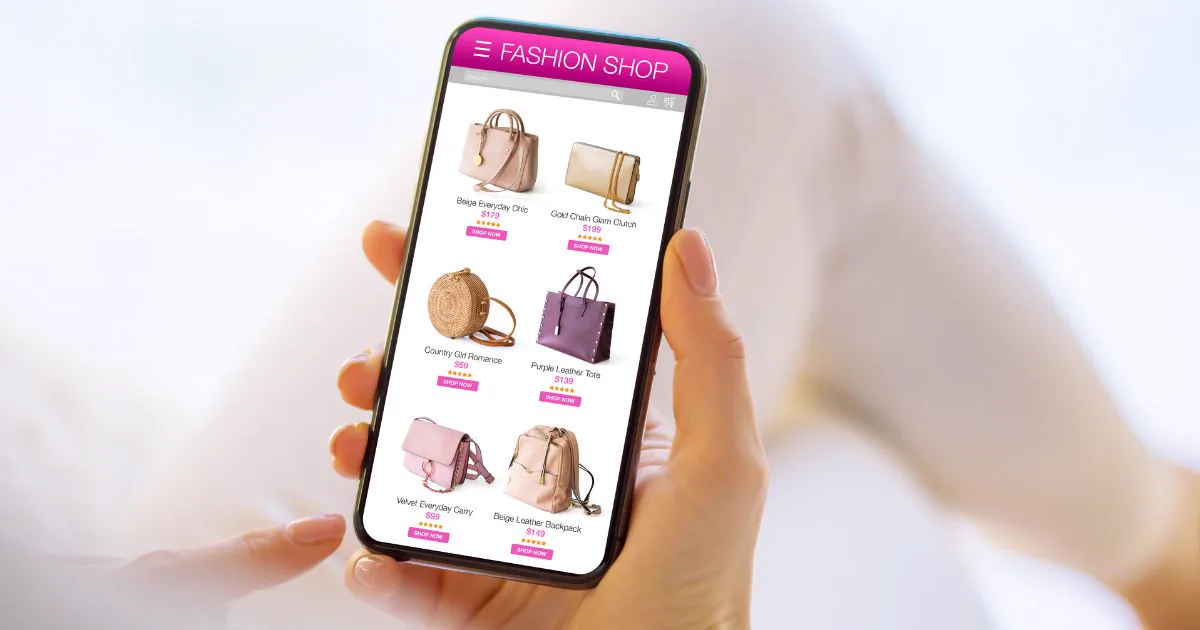
Let's imagine an e-shop selling fashion. Based on RFM analysis we can prepare targeted campaigns:
- For champions: Exclusive access to new collections 24 hours before the official launch, VIP invitations to fashion shows, a personal shopping assistant. An email with the subject "Just for our VIP customers: Exclusive Spring 2025 Collection".
- For potentially loyal customers: A loyalty programme with points for purchases that can be exchanged for discounts, a regular newsletter with styling tips using products they already own. "Become our VIP customer – just 2 purchases away from exclusive benefits!"
- For customers who need attention: A personalised email with a selection of products from categories that interest them. "We know you have style – we've picked pieces you shouldn't miss."
- For promising new customers: How to properly care for new clothing, an offer of accessories to go with the clothing they bought, a discount on the second purchase.
- For new customers: A welcome email introducing the main product lines. "Find out why thousands of customers love us."
- For hibernating good customers: An email with the subject "We miss you!" with a 20% discount offer, a satisfaction questionnaire. "It's been a while… did we do something wrong?"
- For hibernating regular customers: An email with a significant discount and the latest trends. "30% off just for you – discover our new spring/summer 2025 collection"
- For lost customers: A last attempt at reactivation with a very significant offer. "Last chance: 40% off everything + free shipping"
RFM Analysis and Its Visualisation
RFM analysis is most often visualised on a three-dimensional chart (a cube) where "each" customer falls into one of the quadrants.
From Practical Use in E-shops
RFM segmentation most often finds its place in mailing campaigns, which let you test individual messages directly on specific groups of customers. Among other things thanks to it, emailing has been experiencing such a renaissance in recent years. It is still considered the channel where addressing your customers directly is the most precise.
The second such place is push notifications, which also allow precise targeting of your customers right in their pockets, on their devices. The implementation procedure for push notifications varies, but with a correct connection to the customer database it lets you inform your customers about important changes in their account or about promotions currently running. This is, among other things, one of the reasons why companies are increasingly adding mobile apps to their omnichannel marketing.
Psychographic Segmentation as a Complement to RFM Analysis
RFM analysis is great for understanding buying behaviour, but sometimes you need to go deeper and understand why customers buy the way they do. This is where psychographic segmentation comes in.
This can no longer be read from the data, but must be carried out by collecting qualitative and quantitative data through questionnaires, interviews, analysis of customer reviews, observation of behaviour on social networks or CRM data. By subsequently analysing this information, recurring patterns are identified, on the basis of which customer segments with a similar mindset or lifestyle are created.
Psychographic segmentation takes into account:
- Customers' values and attitudes
- Lifestyle
- Interests and hobbies
- Personality traits
By combining behavioural RFM analysis and psychographic segmentation you gain a much deeper understanding of your customers. For example, among your Champions there may be people who buy for completely different reasons:
- Pragmatists: They buy because your products solve their problem best
- Status-oriented: They buy because your brand raises their prestige
- Price-sensitive: They buy because you offer the best value for money
- Hedonists: They buy for the joy of shopping and consuming
Psychographic segmentation is more demanding in both time and money than ordinary segmentation by demographic or transaction data.
Segmentation, Targeting, Positioning: A Three-Phase Approach
Customer segmentation is in fact the first phase of a more comprehensive marketing approach known as STP (Segmentation, Targeting, Positioning):
1. Market Segmentation
In this phase we divide the market into segments, which we have already described. Besides RFM analysis we can use other segmentation criteria as well:
- Geographic: Division by location (continents, countries, regions, cities)
- Demographic: Division by age, gender, income, education, marital status
- Behavioural: Division by buying behaviour, product usage, loyalty
- Psychographic: Division by lifestyle, values, attitudes
2. Targeting
After segmentation we must decide which segments to focus on. Not all segments are equally attractive or equally suitable for your products.
When deciding which customer groups to target, it is important to assess several things:
- How big the group is and whether it will keep growing,
- whether you can make money on it and how much it will cost to serve it,
- how strong the competition is in the given area,
- and whether the group makes sense given what the company can do and where it is heading.
The goal is to choose the customers that it is really worth the company's while to approach.

If you have a limited budget, focus first on Champions and Potentially Loyal Customers.
3. Positioning
The last phase is positioning – determining how we want customers in the chosen segments to perceive us. Positioning defines the unique position of your brand in customers' minds.
Effective positioning should:
- Clearly communicate what makes your product / your offer unique
- Be relevant to the target group
- Be easily distinguishable from the competition
- Be legible and easy to remember
- Be sustainable in the long term
The Most Common Mistakes in Customer Segmentation
Although customer segmentation is relatively straightforward, there are several common traps you should avoid:
1. Too Many Segments
It's tempting to create lots of detailed segments, but if you have too many, the whole system becomes unusable.
2. Segmentation That Is Too Static
Customers change over time. Segmentation should be a dynamic process that is updated regularly.
3. Ignoring Transitions Between Segments
Watch how customers move between segments. If you see a customer moving from the Champion category to the Needs Attention category, it is a warning signal.
4. Homogeneous vs. Heterogeneous Segmentation
With homogeneous segmentation we divide customers by similar characteristics. Heterogeneous segmentation, on the other hand, looks for groups that differ from each other as much as possible. Both methods have their place, but it is important to know which one you are using and why.
5. The Same Approach to All Segments
Even after segmentation has been carried out, companies sometimes communicate with all segments in the same way. That's like buying shoes of the same size for all customers – for some they will be too small, for others too big.
Conclusion: Customer Segmentation as a Competitive Advantage
In today's world, where customers expect a personalised approach, quality customer segmentation is a necessity, not a luxury. RFM analysis is a simple but powerful tool that helps companies understand their customers better and allocate their marketing resources more effectively.
If you haven't paid attention to customer segmentation so far, start right away. Even a simple RFM analysis can bring a significant improvement in your marketing results. Remember that it isn't important to have a perfect system from the start – what matters is to begin, learn from the data and gradually improve the system.
And if you already use segmentation, consider whether you are using all of its possibilities. Do you combine RFM analysis with psychographic segmentation? Do you update the segments regularly? Do you adapt communication to the individual segments?
The future of marketing belongs to those who can understand their customers and offer them exactly what they need, at the right time and in the right way. And that is exactly what customer segmentation is for. Would you like to look at your customer data from different angles? Do you need advice on RFM analysis? Contact us, we'll be happy to help.
Frequently Asked Questions
What is RFM analysis?
RFM analysis is a method of evaluating customers by when they last bought, how often they buy and how much they spend.
What is the difference between market segmentation and customer segmentation?
Market segmentation works with the overall audience, while customer segmentation focuses only on those who have already bought from you.
What will RFM analysis be good for in practice?
It will help you target ads better, so you don't throw money and time away on those who won't buy anyway.
What data do I need for RFM analysis?
Customer ID, transaction ID, and the date and value of the purchase are enough.